
Product Overview
Dual Transistor in a Hermetic Metal Can, Wearing Gold-Plated Leads
Condition
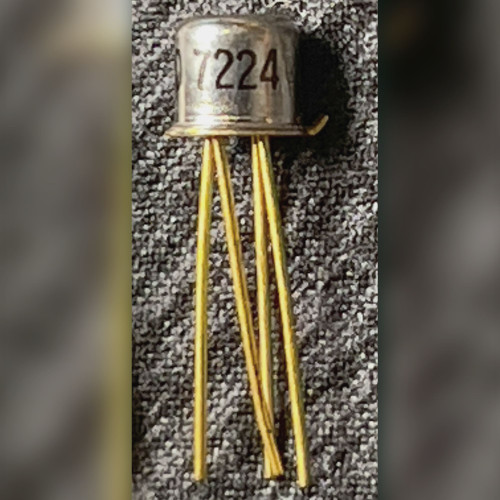
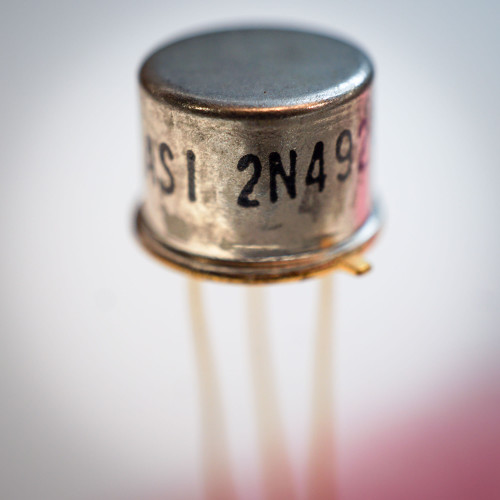
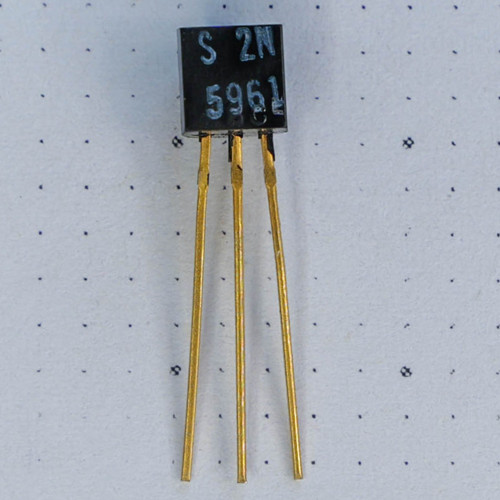
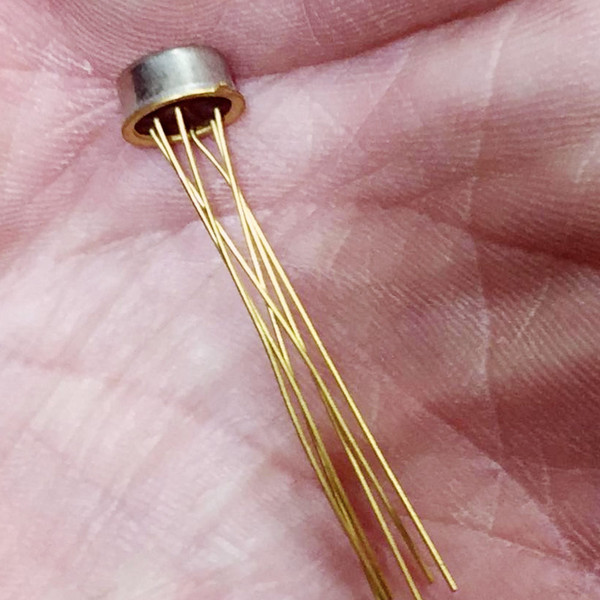
New, unused stock. The photograph shows a short, bright metal can seated on a gold-plated flange, with a fan of fine gold-plated leads running out full length, uncut and unformed. The leads are straight and clean with no solder on the tips, no kinks, and no oxidation or tarnish anywhere on the gold. No brand mark, type number, or date code is visible in the photographed view, and the piece is shown in an open palm for scale, the can itself about fingertip-wide with the leads fanning out several times that length across the palm. Brand and type number are not confirmed.
Same or next business day shipping from our Idaho warehouse. Honest pricing, no nonsense.
Online since 1999. We are here for our customers, with a no-hassle satisfaction guarantee.
Product Overview
This is a dual transistor: two transistor dies sealed inside a single hermetic metal can so that both halves live on the same thermal island. That construction is why designers reached for duals in the first place, in differential input pairs, current mirrors, log and antilog stages, and the front ends of instrument amplifiers, where two separate devices drifting apart with temperature will quietly ruin the measurement. Gold-plated leads and a hermetic can are the signature of instrument-grade and high-reliability semiconductor practice from the metal-can era, and this piece carries both. What it does not carry is a marking: nothing readable appears on the can or the header in the photographed view, so no manufacturer, type number, polarity, or electrical rating is confirmed here. The photograph is the specification. Buyers who want a known device should plan to identify this one on a curve tracer or bench supply before it goes into a design.
Key Features
- Configuration: dual transistor, two devices in one package
- Package: hermetic metal can on a gold-plated flange
- Leads: gold-plated, full length, uncut and unformed as photographed
- Finish: bright can, untarnished gold, no solder residue on the lead tips
- Markings: none visible in the photographed view
- Brand and type number: Not confirmed - no marking readable on the part
- Polarity, gain, and voltage ratings: Not confirmed - curve trace or verify against a datasheet before use
- Lead count and pinout: Not confirmed - identify each lead before wiring
- Condition: New, unused stock
Applications
- Analog designer building a long-tailed pair who wants both halves on one thermal island rather than two loose devices
- Bench technician restoring a vintage instrument front end that originally used a can-package dual
- Hobbyist or student putting an unmarked semiconductor on a curve tracer to identify it and learn the process
- Collector or parts-drawer keeper stocking gold-lead hermetic devices before the metal-can supply thins out further
Frequently Asked Questions
What makes a dual transistor different from using two separate transistors?
Both dies share one hermetic package, so they sit at nearly the same temperature and track each other as the circuit warms up. In a differential pair or a current mirror that thermal coupling is the whole point, and it is the part of the behavior you cannot reproduce by soldering two loose transistors side by side.
Is there a manufacturer name or type number on this device?
Not in the view we photographed. The can and the header show no readable brand, type number, or date code, so we list it by what it plainly is rather than guessing at a family. If a marking matters to you, treat this as an unmarked device.
Are the two halves a matched pair?
Not confirmed. Many can-package duals were sold as matched or graded pairs, but nothing on this piece states a grade and we have not measured it, so do not design around matching. Measure both halves yourself if your circuit depends on it.
Can I solder these gold-plated leads normally?
Yes, with the usual caution that applies to gold: gold dissolving into tin-lead solder can leave a brittle joint, so many assemblers tin the leads and wick the first pass off before making the final joint. For a bench prototype a clean iron and a short dwell are usually enough.
What am I actually buying here, and what am I taking on?
You are buying exactly what the photograph shows: one new, unused dual transistor in a hermetic metal can with full-length gold-plated leads, sold with no marking, no datasheet, and no electrical test performed here. The condition is straightforward and the cosmetics are clean, but the identification work is yours, which is why this sits where it does rather than in a distributor catalog with a spec sheet attached. If you want a guaranteed part number and published curves, buy a marked device instead. If you are comfortable with a curve tracer, or you want a hermetic gold-lead dual for a drawer, prototype, or teardown, this one is honest about what it is. Shipping is $8 flat rate and free once your order passes $28, and orders leave our Idaho warehouse the same or next business day.
Two dies under one gold-trimmed lid, sealed against the world by somebody who expected them to matter, and now missing the name that would tell you why. Put it on a curve tracer and let it introduce itself.