null

Methode Electronics MP-0100-18-DP-1 36-Pin Card Edge Connector, New

Methode Electronics

(No reviews yet) Write a Review
$3.89
SKU:
R21013_AC-006-005
Condition:
New
Availability:
Ships same business day.
Brand:
MicroPlastics, Sullins Connector
Part #:
MP-0100-18-DP-1
Adding to cart… The item has been added

Product Overview

Methode Electronics MP-0100-18-DP-1 Card Edge Socket, 36 Contacts on 0.100 Inch Centers, Gold Plated

Condition

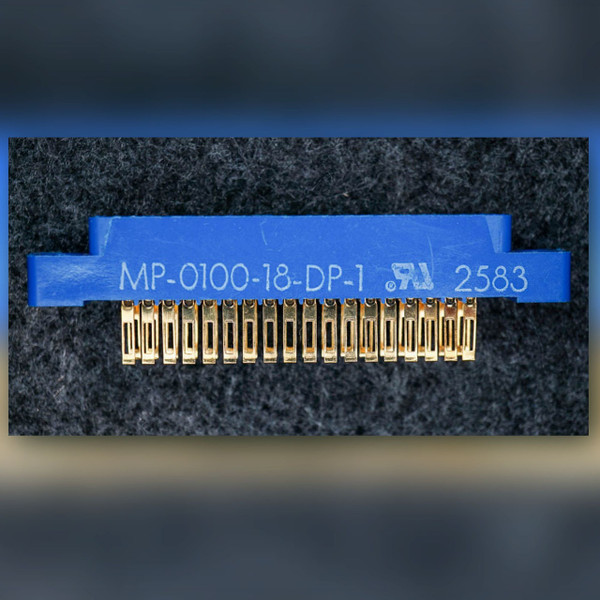
New, unused stock. The photographed sample carries MP-0100-18-DP-1 molded into the blue body, followed by the UL recognized-component mark and the molded number 2583, which the owner reads as a 1983 week-25 date code. Gold on the contacts is bright and even across both rows, and the flat slotted solder lugs on the underside are straight and clean with no solder, no tinning residue, and no oxidation. The top face carries a boxed M logo and both rows numbered 1 through 18, marked A and B, with a through hole in the mounting ear at each end. This is one piece pulled from shelf stock for the camera - mold and date markings on other pieces may vary, so the photos are the spec for the piece shown.

Same or next business day shipping from our Idaho warehouse. Honest pricing, no nonsense.

Online since 1999. We are here for our customers, with a no-hassle satisfaction guarantee.

Product Overview

This is a female card-edge receptacle - the socket half that a printed circuit board slides into, used as a backplane slot, a card extender, or a plug-in module socket. It carries 36 contacts, 18 per side in a dual readout arrangement, gold plated for low and stable contact resistance on signal-level circuits. Methode Electronics built the MP-0100 family as its standard card edge line, and the molded designation decodes the way the series always did: MP for Methode, 0100 for 0.100 inch contact centers, 18 for eighteen contact pairs, DP-1 for the dual-row solder eyelet termination you can see on the underside. Published figures for this part list 0.100 inch (2.54 mm) contact pitch, 0.200 inch (5.08 mm) row-to-row spacing, a blue glass-filled thermoplastic housing rated UL 94V-0, selective gold over nickel on copper alloy contacts, and 3 A continuous per contact - verify these against the datasheet before you commit board artwork or a current budget. The full part number is molded into the body, so the part still identifies itself decades after the paperwork is gone, and both the A and B rows are numbered position by position on the top face, which makes tracing a pinout on the bench straightforward.

Key Features

  • Manufacturer: Methode Electronics, MP-0100 standard card edge series
  • Part number: MP-0100-18-DP-1, molded into the connector body
  • Contacts: 36 total, 18 per row, dual readout (both faces of the card)
  • Contact pitch: 0.100 inch (2.54 mm) center to center, published figure
  • Row spacing: 0.200 inch (5.08 mm) row to row, published figure
  • Termination: gold-plated bifurcated solder lug / eyelet tails, DP-1 style
  • Contact plating: selective gold over nickel on copper alloy, published figure
  • Current rating: 3 A continuous per contact, published figure - verify against the datasheet before use
  • Housing: blue glass-filled thermoplastic, rated UL 94V-0
  • Mounting: end mounting ears with one through hole at each end
  • Position marking: A and B rows numbered 1 through 18 molded on the top face
  • Agency and date marking: UL recognized-component mark molded beside the part number, with the number 2583
  • Condition: New, unused

Applications

  • Instrument tech rebuilding a vintage instrumentation backplane where the original 18-pair edge socket has cracked or lost contact tension
  • Retrocomputing builder wiring S-100 bus or other 0.100 inch bus work and wanting a period-correct gold-plated receptacle rather than a modern substitute
  • Maintenance electrician restocking an industrial card rack so plug-in control boards seat on known-good sockets
  • Arcade PCB and legacy test gear repairer replacing a tired edge connector on a board that was never meant to be soldered permanently in place
  • Synthesizer restorer or bench builder laying out a small backplane for plug-in modules and wanting numbered positions to keep the pinout honest

Frequently Asked Questions

How many contacts do I actually get, and are both faces of the card used?

36 contacts total, 18 on each side. The photographs show it: the top face is numbered 1 through 18 on both the A row and the B row. It is a dual readout part, so a card with pads on both faces is contacted on both faces.

What is the contact pitch and row spacing?

Published figures for the MP-0100 series are 0.100 inch (2.54 mm) contact centers and 0.200 inch (5.08 mm) between rows - the 0100 in the part number is the pitch. We are passing those along rather than reading a dimension off a photograph, so check the manufacturer datasheet for MP-0100-18-DP-1 before you commit artwork or cut a card edge.

How does it terminate and how does it mount?

The photographs show flat slotted solder lugs on the underside, the DP-1 dual-row eyelet style, so wire or board leads pass through and get soldered rather than pressed in. Each end of the body carries a mounting ear with a through hole for a screw or standoff. No mounting hardware, screws, or standoffs are included - only the connector shown.

What does the molded 2583 mean?

The owner reads it as a date code: 1983, week 25. That is his reading of the marking, not a claim printed anywhere else on the part, and it is the kind of detail worth knowing if you are matching a period-correct restoration. Other pieces on the shelf may carry different date markings.

I need four of these for one card cage, not a bag of fifty. Can I just buy four?

Yes, and that is the whole point of buying connectors here. Count the slots your chassis needs, order that number, and skip the surplus lot that leaves you with forty-six spares in a drawer. Shipping is $8 flat rate and free once your order passes $28, so a few of these plus whatever else the rebuild needs usually lands you in free shipping territory, and orders leave the Idaho warehouse the same or next business day.

A boxed M, a 1983 date code, and eighteen numbered pairs molded right into the blue - Methode expected somebody to be reading this connector under a bench lamp forty years later. Line your card up and let the numbering do the talking.

Reviews

(No reviews yet) Write a Review