

Product Overview
Intel A80502100 Pentium 100 2.9V SPGA-296 Microprocessor for Gold Recovery
Condition
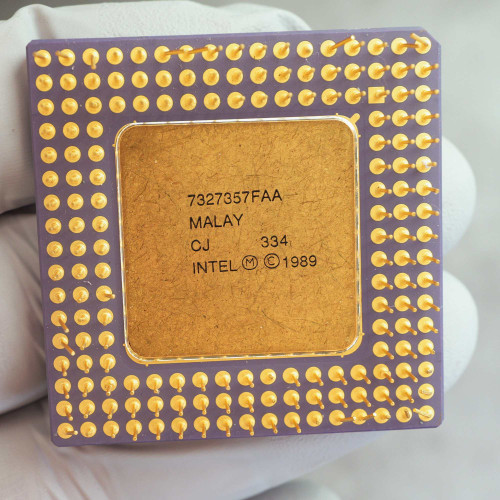
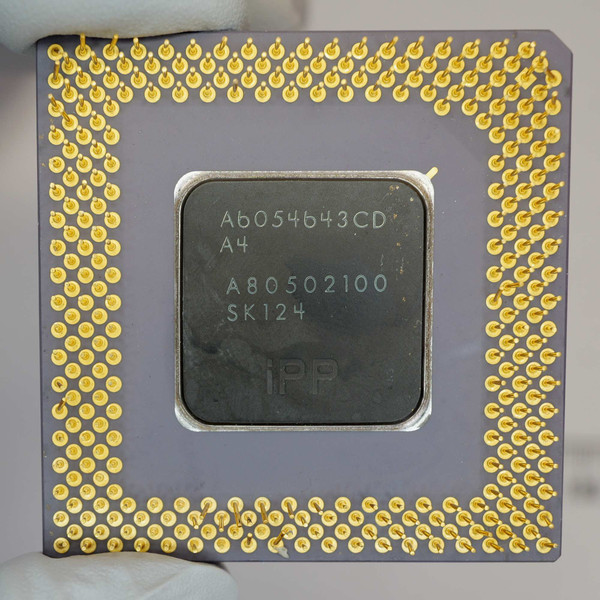
Used. Evaluation: Visual inspection only. Function testing not performed. Untested unit with bent pins along the edges, offered strictly as scrap for precious metal recovery or vintage hardware display. Markings legible on top: intel pentium A80502100 C6140687 SK124 2.9V 0834; underside slug markings legible: A6054643CD A4 A80502100 SK124 iPP.
Same or next business day shipping from our Idaho warehouse. Reliable parts since 1999. Honest pricing, no nonsense.
We are here for our customers, with a no-hassle satisfaction guarantee.
Product Overview
Intel A80502100 is a classic fifth-generation Pentium microarchitecture processor operating at a 100 MHz core clock with a 66 MHz front-side bus. Built on a 49.5 mm square ceramic staggered pin grid array (SPGA-296), this unit incorporates Intel 2.9V Voltage Reduction Technology (VRT) core architecture and gold plating across its pin array and underside thermal slug.
Key Features
- Core clock frequency: 100 MHz
- Front side bus frequency: 66 MHz
- Core operating voltage: 2.9V (VRT)
- Package: 296-pin Ceramic Staggered Pin Grid Array (SPGA-296)
- Dimensions: 49.5 mm x 49.5 mm ceramic body
- sSpec: SK124 (mA4 stepping)
- Pin composition: Gold-plated pins
- Thermal slug: Integrated metal heatslug with marked identifiers
Applications
- Precious metal recovery and gold refining from vintage ceramic semiconductor scrap
- Reference specimen for computing history and vintage microprocessor collecting
- Physical display piece for electronics education and hardware architecture demonstrations
- Vintage desktop shadowbox or retro computing hardware display
Frequently Asked Questions
What socket configuration does this processor use?
The A80502100 uses a 296-pin staggered pin grid array (SPGA) designed for Socket 5 and Socket 7 motherboards engineered to supply 2.9V core voltage.
What is the condition of this processor, and is it operational?
This unit is sold strictly untested and as-is for gold recovery, scrap, or vintage display. It exhibits bent pins around the perimeter, and no electrical or functional testing has been performed.
Before gigahertz clocks and flip-chip silicon, computing power was forged in purple ceramic and real gold wire. Whether it heads to a collector display or the refining crucible, this Pentium has finished its run on the motherboard.