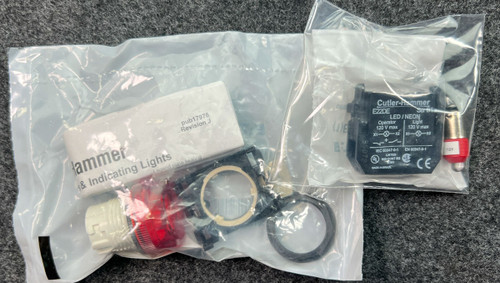


Product Overview
Dual-Color 5mm Panel Indicator LED with Push-In Mounting Collar
Condition
New old stock. Vintage component in unused condition. Includes T-1 3/4 bi-color LED with push-in panel mounting clip.
Ships same or next business day from our Idaho warehouse. Honest pricing, no nonsense.
Online since 1999. We are here for our customers, with a no-hassle satisfaction guarantee.
Product Overview
Linrose Electronics B4301H1/5 is a 5 mm (T-1 3/4) bi-color indicator LED designed for front-panel status display. Utilizing a two-lead antiparallel configuration, reversing the DC voltage polarity switches the emitted color between red and green.
Key Features
- Dual-color emission: red and green in a single 5 mm lamp
- Two-lead bidirectional setup changes color via polarity reversal
- Push-in mounting clip mounts into a 1/4-inch panel hole
- Clear diffused epoxy lens with wide viewing angle
- Compatible with 6 V, 12 V, and 28 V systems using appropriate series dropping resistors
Applications
- Panel status indicators for vintage audio gear, test fixtures, and custom benchtop power supplies
- Go/no-go polarity detectors and logic state indicators for electronics bench builds
- Direct replacement of legacy IDI and Linrose indicator lamps in industrial panels
Frequently Asked Questions
How do you switch between red and green?
This LED uses a 2-lead bidirectional antiparallel design. Applying DC voltage in one direction illuminates red, while reversing the supply polarity illuminates green.
What size panel hole is required for mounting?
The included push-in mounting collar installs into a standard 1/4-inch (0.250 in) panel hole.
Why buy an individual vintage indicator instead of a bulk surplus lot?
You receive the exact documented Linrose assembly with its panel clip without buying excess unsorted inventory. Shipping is $8 flat rate, free once the order passes $28, and orders leave the Idaho warehouse the same or next business day.
Simple dual-color status without extra wiring or modern digital overhead. Pop it into the panel, wire the resistor, and let clean red and green tell the whole story.