

Product Overview
Philips BZX79-C9V1 - 9.1 V 0.5 W Zener Diode, DO-35
Condition
New. The photo shows a representative unit from our stock. Same or next business day shipping from our Idaho warehouse. Honest pricing, no nonsense. Online since 1999. We are here for our customers, with a no-hassle satisfaction guarantee.
Product Overview
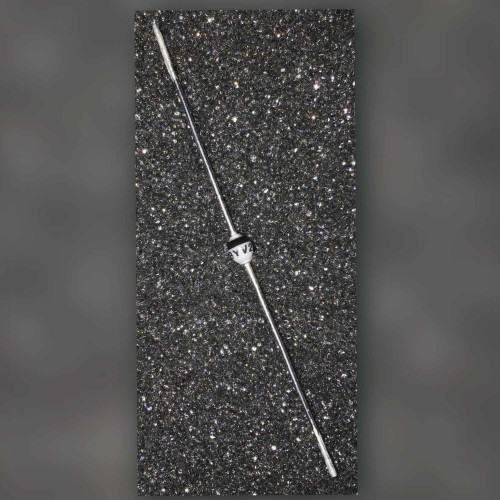
The BZX79-C is the 500 mW glass zener line out of the Philips discrete catalog, 37 voltage steps from 2.4 V to 75 V at plus or minus 5 percent, now published by Nexperia. The four photos are four rotations of the same diode held against black foam: a pale tan glass body on long bright silver leads, printed PH on one face, BZX above 79C on the next, and 9V1 on the third. 1990 of this part number are on the shelf, sold one at a time.
Key Features
- Zener voltage: 9.1 V nominal, read off the 9V1 printed on the photographed body
- Tolerance: plus or minus 5 percent, the C grade, per Nexperia's published BZX79 series data
- Power dissipation: 500 mW, per Nexperia's published BZX79 series data
- Working window: roughly 8.5 V to 9.6 V at the test current, per the same published series data
- Package: DO-35 glass axial, catalogued by Philips as SOD27, per the same published data
- Mount: through-hole, axial leaded
- Marking on the photographed body: PH, BZX, 79C and 9V1 across four rotations
- Series: BZX79-C, 37 published types spanning 2.4 V to 75 V
- Verify against Nexperia's published BZX79 series data before designing in.
Applications
- Rail clamping and overvoltage limiting on 9 V nodes
- Shunt regulation in low-current bias strings
- Reference legs in discrete comparator and detector circuits
- Through-hole board repair calling out a 9.1 V half-watt zener
Frequently Asked Questions
How many should I order?
Order the count the build needs. 1990 of this part number are on the shelf, sold one at a time, so a run of boards and a drawer of spares come out of one order. Shipping is $8 flat rate and free on orders over $28, so small parts like this ship smartest as part of a larger order.
The old title said 9.05 V. Which is it?
9.1 V, and the glass settles it rather than a catalog argument. Turn the diode through the four photos and it reads PH, then BZX above 79C, then 9V1, then that BZX over 79C face again. 9V1 is simply how the catalog writes 9.1 V, with the V standing in for the decimal point. There is no 9.05 V step in the published BZX79-C range at all; the steps either side of this one are 8.2 V and 10 V. The 9.05 was a transcription slip on the old page, and this page follows what is printed on the part.
Nine point one volts, spelled 9V1 on a body too short to hold a decimal point.