
Product Overview
Three-Output Microprocessor Reset Sequencer with Pushbutton Input, 8-Pin SO Surface Mount
Condition
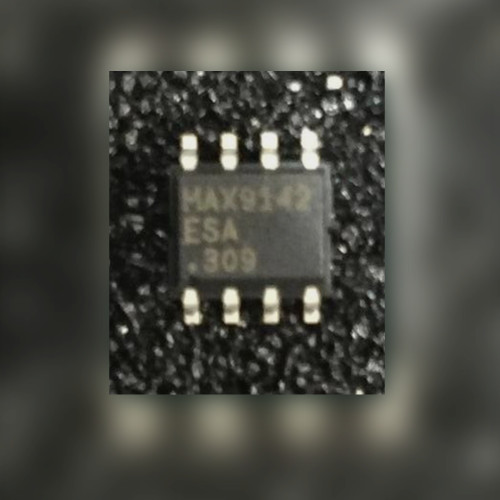
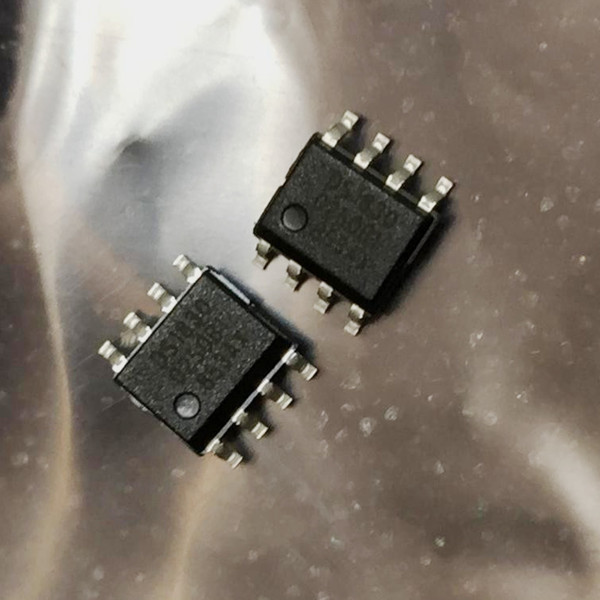
Condition: unused, new old stock (NOS). DS1830-family reset sequencer in an 8-pin SO surface-mount body with gull-wing leads. Sold each.
Ships same or next business day from our Idaho warehouse. Honest pricing, no nonsense.
Online since 1999. A no-hassle satisfaction guarantee on every order.
Product Overview
Dallas Semiconductor's DS1830 Reset Sequence Pushbutton watches a microprocessor supply and a pushbutton input, then releases three reset lines one after another: RST1, then RST2, then RST3. The DS prefix is Dallas; the part later carried the Maxim name, and Analog Devices publishes it today.
Key Features
- Three open-drain, active-low reset outputs released in sequence (RST1, RST2, RST3)
- Pushbutton reset input for manual override
- Asserts resets during power transients; precision temperature-compensated reference
- TD pin sets the delays: TD to GND gives 10, 50 and 100 ms; TD open gives 20, 100 and 200 ms; TD to VCC gives 50, 250 and 500 ms
- TOL pin selects the monitoring tolerance: 5% with TOL at VCC, 10% with TOL at GND
- Operating temperature: -40 C to +85 C
- 8-pin SO pinout: 1 PBRST, 2 TD, 3 TOL, 4 GND, 5 RST3, 6 RST2, 7 RST1, 8 VCC
Applications
- Bringing a processor, its memory and its peripherals out of reset in a fixed order after power-on
- Wiring a front-panel reset button that restarts a board through the same staged release
Frequently Asked Questions
Do the reset outputs need pull-up resistors?
Yes. They are open-drain, so each line needs a pull-up, either a resistor or one built into the input it drives.
How do I set the reset timing?
Strap the TD pin. Tied to GND, the three resets release at 10, 50 and 100 ms; left open, at 20, 100 and 200 ms; tied to VCC, at 50, 250 and 500 ms.
Will it fit an 8-pin DIP socket?
No. It is the 8-pin SO surface-mount body with gull-wing leads, so it solders to SO-8 pads rather than plugging into a DIP socket.
Most boards come out of reset all at once; this one lets them wake in three shifts, anywhere from 10 ms to half a second, set by one strapped pin. Pick the pace and give your power-up some manners.