

Product Overview
Windowed AMD AM27C128 EPROM, 16K x 8 in a 28-Pin Ceramic DIP, Erasable and Ready to Reburn
Condition
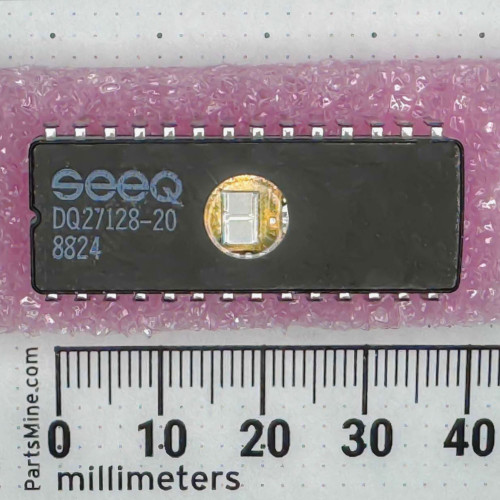
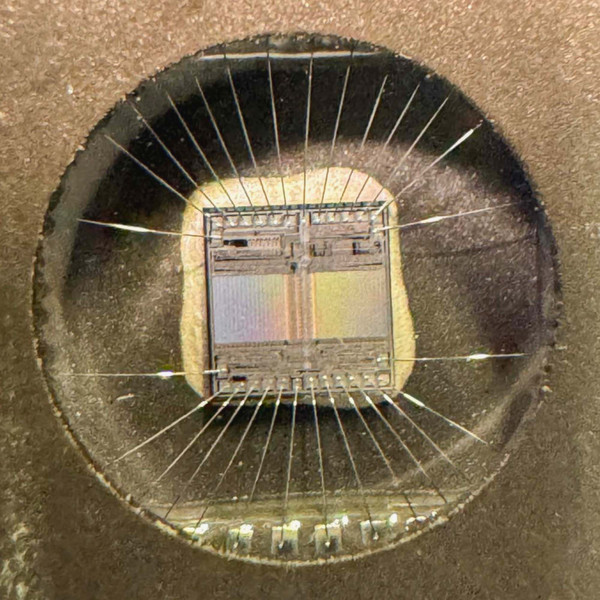
Used. This is a used pull, removed from a socket on a printed circuit board and never soldered, in good cosmetic condition. In the photos the black ceramic body carries a fully legible top marking: AM27C128 over -125DC, 12.5V PGM, and the lot code 016YCPZ, with the AMD logo beside it. All 28 leads are present, straight, and bright, with no solder on the tips and no sign of desoldering heat, which is exactly what a socket pull looks like. There are a few light scuffs on the ceramic surface. The quartz erase window is clear enough that the silicon die and its bond wires photograph sharply through it. The part is shown on pink anti-static foam with the PartsMine millimeter ruler in frame for scale. It has not been electrically tested here, and the contents of the array are not confirmed.
Same or next business day shipping from our Idaho warehouse. Honest pricing, no nonsense.
Online since 1999. We are here for our customers, with a no-hassle satisfaction guarantee.
Product Overview
The AM27C128 from Advanced Micro Devices is a 128-Kilobit ultraviolet erasable programmable read-only memory, organized as 16,384 words by 8 bits and running from a single +5 V supply. It lives in a 28-pin ceramic dual in-line package with a quartz window over the die, which is what makes it erasable: flood the window with UV, the array returns to blank, and the device takes a fresh image on a standard programmer. This particular device is marked AM27C128-125DC with 12.5V PGM printed directly beneath it, so the programming voltage is stated on the package itself rather than left to guesswork. It is the same 27C128 footprint and pinout that firmware sat in across computers, peripherals, arcade hardware, and industrial controllers, and a windowed part like this one is the version you want when the code is going to change more than once.
Key Features
- Capacity: 128 Kilobit, organized as 16,384 words by 8 bits
- Supply: single +5 V operation
- Erasure: ultraviolet light through the quartz window, fully reprogrammable
- Package: 28-pin ceramic dual in-line package (CERDIP) with erase window
- Top marking read from the part: AM27C128 -125DC, 12.5V PGM, lot code 016YCPZ, AMD logo
- Access time: the original listing states as fast as 200 ns; the package carries a -125 suffix, so confirm the speed grade against the AMD datasheet before you design to it
- Leads: 28 straight, bright leads, pulled from a socket and never soldered
Applications
- A retrocomputer restorer burning a known-good ROM image for a machine whose original 27C128 has gone soft
- An arcade or pinball tech socketing a replacement program chip and keeping the window so the board can be re-flashed later
- An embedded developer running iterative firmware builds with a UV eraser on the bench instead of a one-shot OTP part
- A maintenance electrician recovering a legacy industrial controller that expects a 28-pin 27C128 in its ROM socket
Frequently Asked Questions
What exactly is printed on the package?
Reading straight off the photos: AM27C128 on the first line, -125DC on the second, 12.5V PGM on the third, and 016YCPZ on the fourth, with the AMD logo alongside. Those are the only markings visible on the top surface.
Was this desoldered off a board?
No. It came out of a socket on a printed circuit board and has never been soldered. Nothing ever heated these leads, nothing ever wicked solder into them, and nobody ever straightened them out of a through-hole. That is why the tips photograph clean and bright, and it is the reason a socket pull drops back into a socket the way a fresh part does.
How fast is this one?
The original listing describes access times as fast as 200 nanoseconds for the AM27C128, and the device in hand is marked with a -125 suffix. We are not going to convert a suffix into a guaranteed timing number for you. Check the marking against the AMD datasheet and confirm the grade if your timing budget is tight.
Is it blank, or does it still hold somebody else's code?
Not confirmed. We have not read the array. Treat it as unknown: give it a full UV erase, run a blank check on your programmer, then write your image and verify. That is the normal routine for a windowed pull anyway.
What programming voltage does it want?
The package itself is marked 12.5V PGM, which is the programming supply the device was labeled for. Select the AM27C128 profile on your programmer rather than entering values by hand, and verify against the AMD datasheet before you commit a burn.
It is a used socket pull and untested - what am I actually taking on?
You are getting the exact device in these photographs and nothing more: a windowed AM27C128-125DC in ceramic DIP, 28 straight leads that were pulled from a socket and never soldered, legible markings, a clear erase window, a few light scuffs on the body. The provenance takes one worry off the table - no desoldering heat, no reworked pins - but it does not make the part tested. We have not powered it up, read it, or verified it here, and the data state is unknown, so budget for a UV erase and a blank check as step one. The photos are the spec sheet on condition, so look closely before you buy and ask if something in them matters to your build. Shipping is $8 flat rate and free once your order passes $28, and orders leave our Idaho warehouse the same or next business day.
Very few parts let you look straight at the silicon holding your firmware, and the window on this one puts the die and its bond wires in plain sight. Erase it, burn it, and hand an old board back the code it has been waiting on.