

Product Overview
Hollyland 51NM-030H 3-Amp Miniature Glass Cartridge Fuse for Equipment Protection
Condition
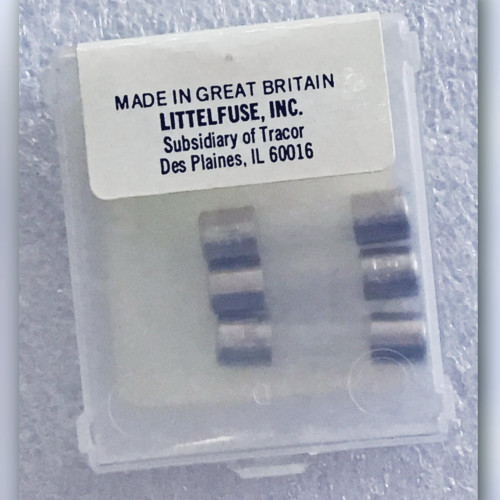
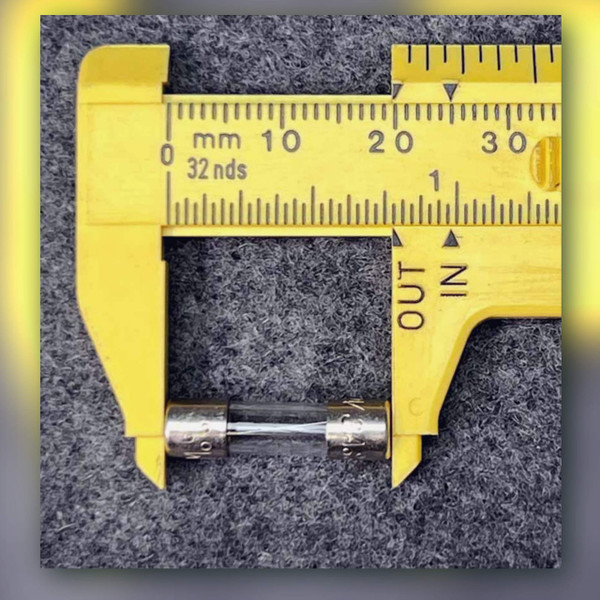
Unused new old stock (NOS). Cylindrical clear glass body with nickel-plated brass ferrules and an intact internal straight element wire. End caps carry stamped markings including NM, 3A, and the Hollyland manufacturer stamp. Nominal dimensions measure 5 mm outer diameter by 20 mm length. Offered per piece.
Ships same or next business day from our Idaho warehouse. Honest pricing, no nonsense.
Online since 1999. We are here for our customers, with a no-hassle satisfaction guarantee.
Product Overview
The Hollyland 51NM series is a fast-acting miniature glass cartridge fuse built in the metric 5x20mm form factor. Rated for 3 amps at 250 volts AC, this fuse provides circuit protection for power supplies, audio electronics, bench instrumentation, and small appliances.
Key Features
- 3A current rating at 250V AC
- Standard 5mm x 20mm miniature cartridge dimensions
- Fast-acting clearing characteristic protects downstream components
- Clear glass barrel allows visual check of element wire integrity
- Nickel-plated brass end ferrules provide clean contact in clips and holders
Applications
- Replacing blown line fuses in bench power supplies, multimeters, and test gear
- Restoring vintage audio receivers, guitar amplifiers, and imported electronics
- Overcurrent protection on custom microcontroller projects and 3D printer boards
Frequently Asked Questions
Is the 51NM series a fast-acting or slow-blow fuse?
The 51NM series is a fast-acting fuse designed to interrupt overcurrent conditions quickly, preventing damage to sensitive components.
Will this fuse fit standard 5x20mm fuse clips and panel holders?
Yes. The fuse measures 5 mm in diameter by 20 mm in length, fitting standard 5x20 mm inline holders, PCB clips, and chassis blocks.
Can I purchase just the fuses I need for my repair?
Yes, each fuse is sold individually so you can buy the exact count needed without having to purchase a full box. If you need spares for your bench, more pieces cost less each, and the price-break table on this page shows what each quantity costs. Orders ship for a flat $8 rate, ship free at $28 or more, and leave our Idaho warehouse the same or next business day.
A 5x20mm glass fuse does the unglamorous job of sacrificing itself so the rest of your bench gear stays safe. Snap it into the clip, close up the chassis, and get your power supply back to work.