



Product Overview
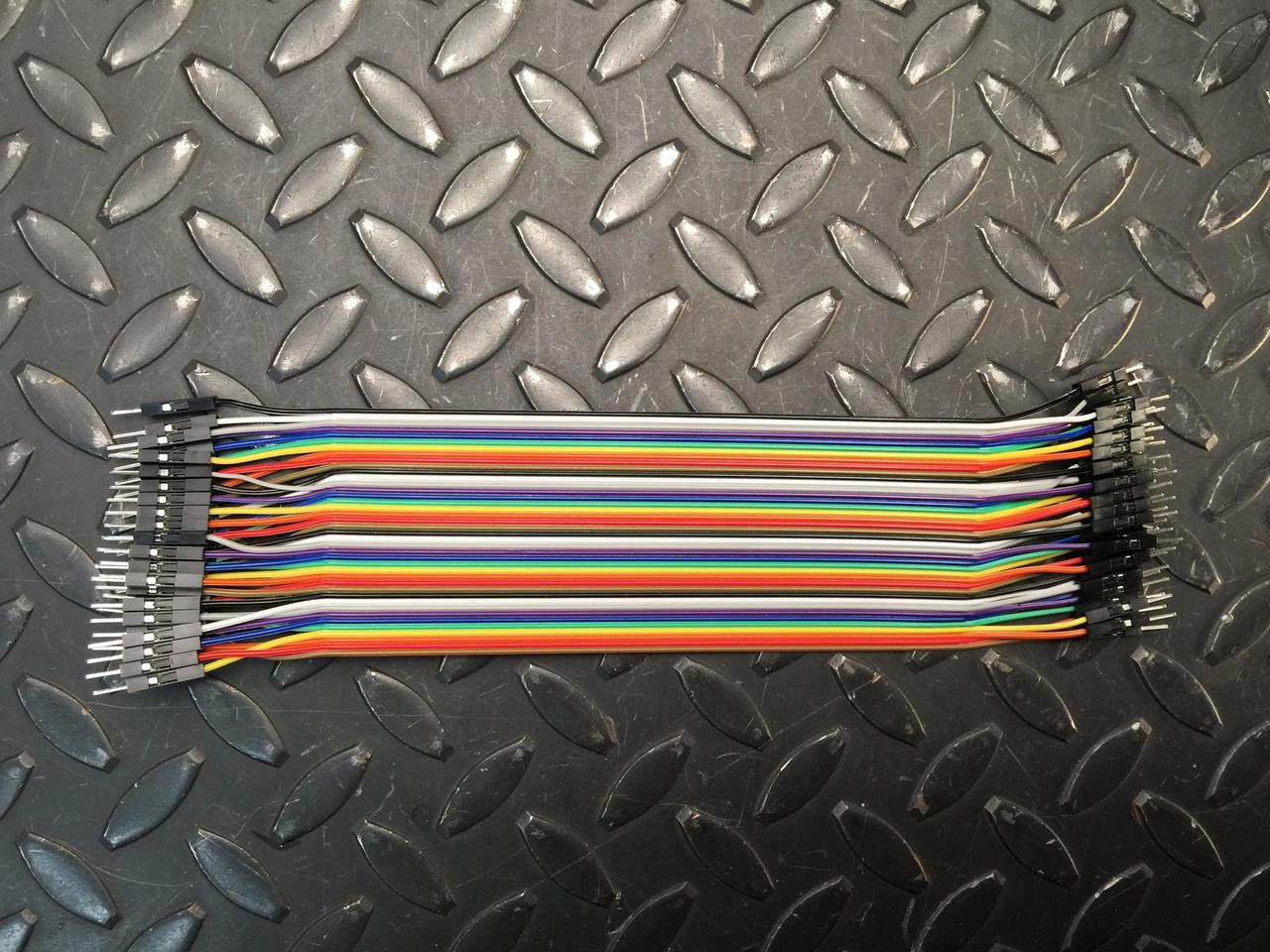
Male-to-Male Breadboard Jumper Ribbon for Organized Prototyping
Ribbon-style jumper wires offer a practical way to create temporary connections while keeping layouts orderly during circuit development. By maintaining consistent spacing, they make signal paths easier to follow and adjust. In breadboard / prototyping work, ribbon jumpers help reduce clutter while allowing fast, solderless changes as designs evolve.
Product Condition
Unused, New Old Stock.
Product Overview
This product consists of a 40-conductor male-to-male jumper wire ribbon with standard 2.54mm spacing. Each wire measures approximately 200mm in length, suitable for spanning breadboards, headers, and development boards. The ribbon can remain intact for structured routing or be separated into individual jumpers as needed.
Key Features
- 40-piece male-to-male jumper wire ribbon
- Standard 2.54mm / 0.1-inch connector spacing
- Approximately 200mm (20cm) wire length
- Compatible with standard breadboards and pin headers
- Ribbon format supports neat, parallel wire routing
- Wires can be separated into individual jumpers
- Designed for repeated solderless prototyping use
Applications
- Solderless breadboard prototyping
- Temporary circuit testing and validation
- Microcontroller and development board projects
- Organized signal routing between headers
- Educational electronics labs and training
- Rapid circuit troubleshooting and reconfiguration
Frequently Asked Questions
What does male-to-male configuration mean?
Each conductor has a male pin on both ends, allowing direct insertion into breadboards or male header connections.
Can the ribbon be split into individual wires?
Yes. The wires can be pulled apart to create single jumper leads or kept together as a ribbon.
What connector spacing is used?
The connectors follow standard 2.54mm (0.1-inch) spacing used on most breadboards and pin headers.
Are these intended for permanent wiring?
No. They are intended for temporary, solderless connections during prototyping, testing, and troubleshooting.
You can route organized connections across a solderless breadboard by keeping the ribbon intact, using the male-to-male jumper wires to bridge headers and test points while maintaining clear signal paths.