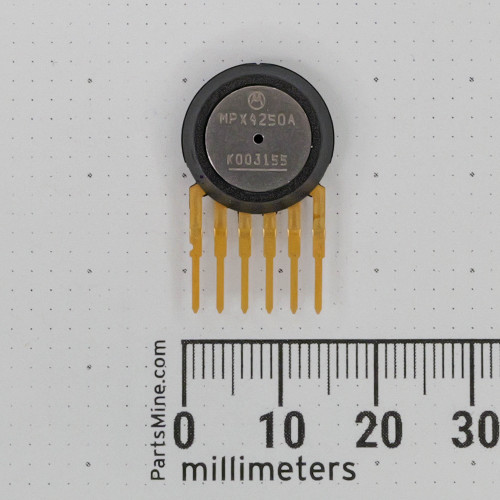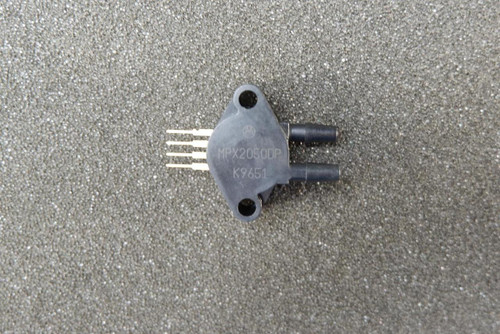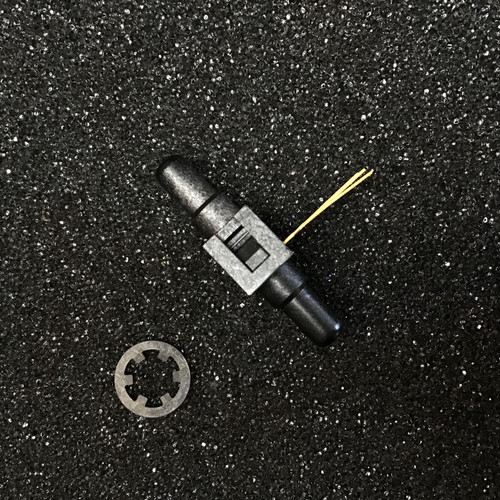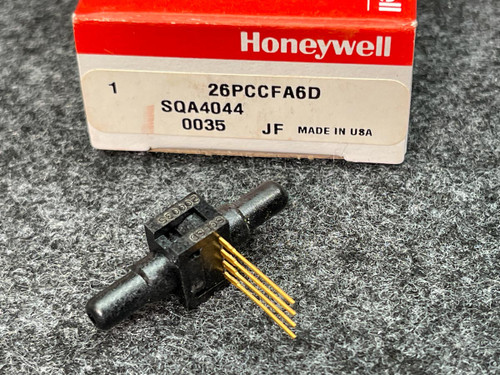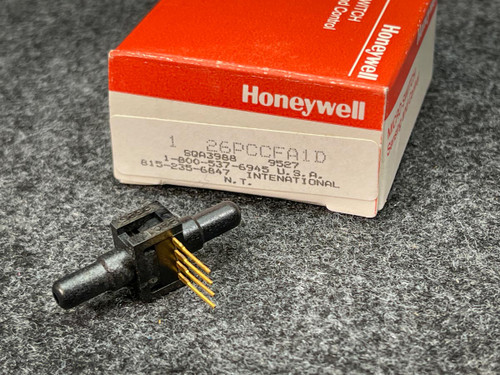


Product Overview
Uncompensated Silicon Pressure Sensor Element (Unused NOS)
This low-level silicon pressure sensing element converts applied pressure into a proportional millivolt signal for external amplification and calibration. Intended for systems with their own analog front end, it supports flexible signal conditioning in 0–100 kPa measurement tasks. A practical tip: pair it with a stable instrumentation amplifier to preserve resolution in low-pressure ranges.
Product Condition
Unused, New Old Stock.
Product Overview
The MPX2101D is a monolithic silicon piezoresistive pressure sensor element from Motorola’s MPX2100/2101 series. It provides a raw, uncompensated Wheatstone bridge output that is ratiometric to its supply voltage. Designed for OEM designs, the element allows users to implement their own gain, offset, and temperature compensation strategies.
Key Features
- Uncompensated silicon piezoresistive pressure sensor
- Low-level millivolt output proportional to pressure
- Nominal 0–100 kPa pressure span
- Wheatstone bridge configuration
- Ratiometric output relative to supply voltage
- Designed for external amplification and calibration
- Chip-carrier style sensor element package
Applications
- Embedded pressure measurement systems
- Airflow and air movement control
- Environmental and HVAC controls
- Laboratory instrumentation and prototyping
- Custom OEM sensor designs
- Educational and experimental platforms
Frequently Asked Questions
Does this sensor include signal conditioning?
No. The MPX2101D provides a raw bridge output and requires external amplification and compensation.
What type of pressure measurement is supported?
It supports differential or gauge pressure measurement depending on port configuration.
Is the output directly compatible with an ADC?
Not directly; the millivolt-level signal is typically amplified before ADC conversion.
Why choose an uncompensated sensor element?
It allows full control over gain, filtering, and temperature compensation in custom designs.
You can build a custom pressure measurement circuit by amplifying the Wheatstone bridge output with an instrumentation amplifier and routing the conditioned signal into an ADC on a controller board.