

Product Overview
Texas Instruments 2N1379 Germanium BJT -25V 200mA 3-Lead Component
Condition
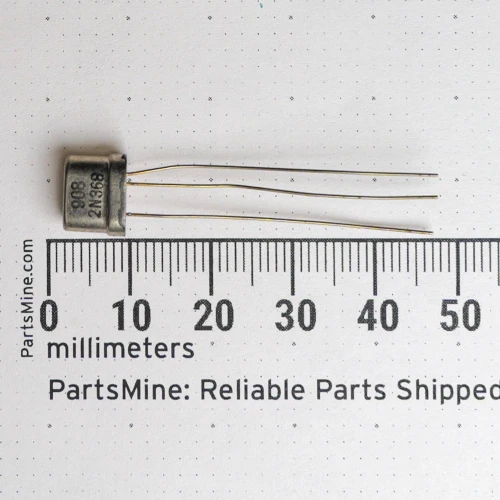
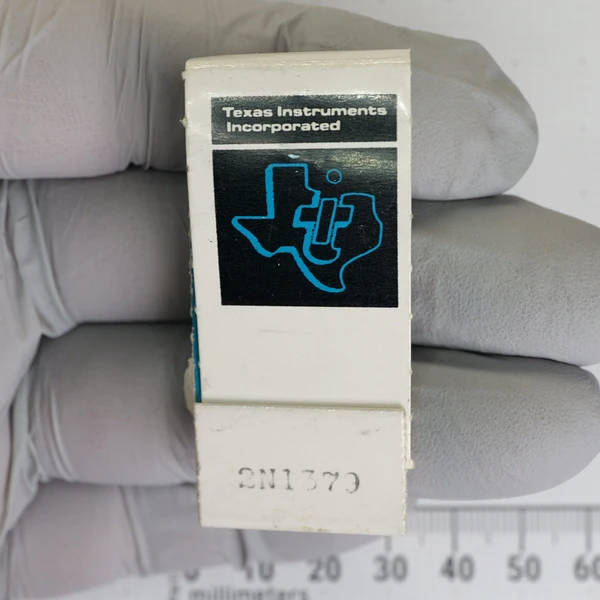
New old stock (NOS). Unused vintage transistor mounted in Texas Instruments printed cardboard folder. Metal can features clear stamped markings: TI logo, 2N1379, and 902, with straight gold-plated through-hole leads.
Same or next business day shipping from our Idaho warehouse. Reliable parts since 1999. Honest pricing, no nonsense.
We are here for our customers, with a no-hassle satisfaction guarantee.
Product Overview
Built for legacy discrete solid-state circuits, the Texas Instruments 2N1379 is a vintage germanium PNP bipolar junction transistor housed in a hermetically sealed TO-5 metal can enclosure. Engineered for low-frequency amplification and signal switching, this device offers the authentic electrical behavior and lower junction threshold characteristic of classic germanium semiconductors.
Key Features
- Semiconductor material: Germanium
- Transistor polarity: PNP
- Collector-base voltage (VCBO): -25 V
- Collector-emitter voltage (VCEO): -25 V
- Collector current (IC): -200 mA
- Package outline: TO-5 (JEDEC TO-205AA) hermetic metal can
- Termination: 3 gold-plated through-hole leads
Applications
- Restoring vintage audio equipment, early solid-state preamplifiers, and broadcast receivers requiring original germanium transistor characteristics.
- Building custom guitar fuzz, overdrive, and boost pedals that utilize vintage germanium clipping curves and warmth.
- Servicing legacy test instruments, analog computers, and early industrial control circuitry engineered around discrete germanium switching stages.
Frequently Asked Questions
What package style and lead configuration does the 2N1379 use?
The device is housed in a standard hermetically sealed TO-5 metal can package with three gold-plated through-hole leads for collector, base, and emitter connections.
Can the 2N1379 directly swap into a circuit designed for silicon PNP transistors?
No. Germanium transistors operate with a lower base-emitter turn-on voltage (typically 0.2V to 0.3V) and have distinct thermal and leakage profiles compared to silicon, requiring circuit bias networks configured specifically for germanium devices.
Silicon made circuits faster and cooler, but germanium gave early solid-state electronics their warm, unmistakable character. Drop this into your build and put authentic vintage tone right on the board.